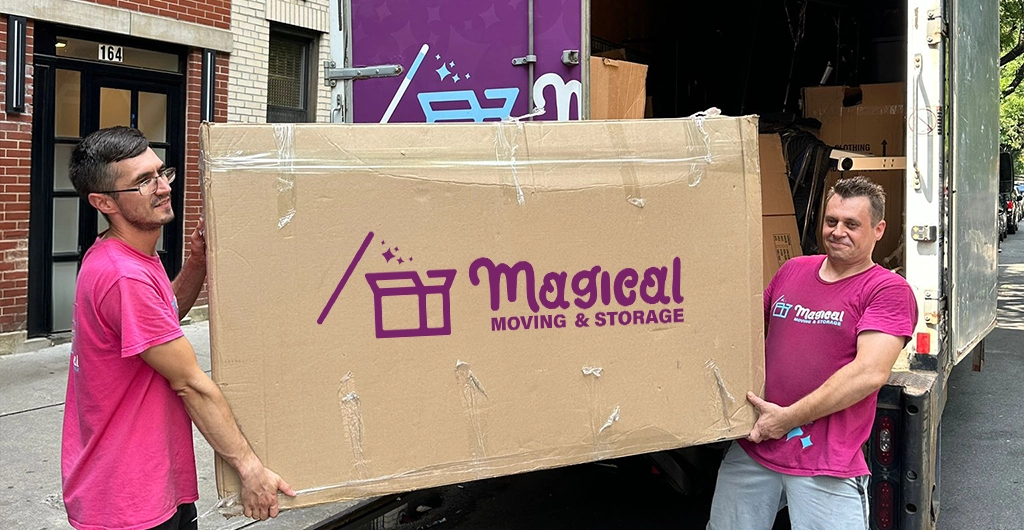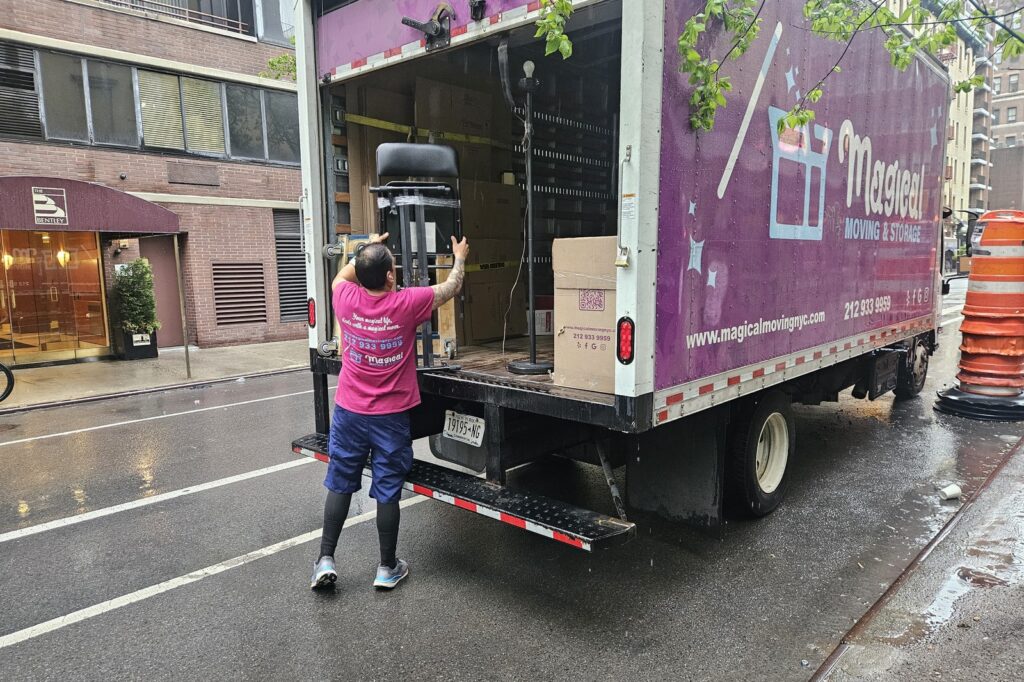
Two leases, two couches, two sets of keys, and one apartment that has to hold all of it. Moving in together in NYC is one of the most common moves we run once the weather turns, the season people half jokingly call cuffing season, and it is also the one people plan the worst, because they plan it as two moves.
It is one move with two pickups. One truck, one crew, one arrival window, and one price that covers both apartments and the new place. Here is how that works, what it costs to add the second stop, and the decisions that make move day short instead of long.
Moving in together in NYC is one move, not two
The instinct is to book two movers, or the same mover twice: one job for your place, one for theirs. That doubles everything that costs money on a NYC move without adding anything you need.
Two separate jobs means two minimums, two sets of travel time, two arrival windows to wait for, and two days off work if the dates do not line up. It also means the first load sits in the new apartment in a pile while you wait for the second, which is exactly the moment you find out the two couches do not both fit.
One job with an extra stop works like this:
- Pickup one. The crew loads the first apartment.
- Pickup two. The same truck drives to the second apartment and loads it.
- Delivery. Everything comes off at the new home, placed by room.
- Optional last stop. Anything you decided not to keep goes to storage or out the door on the same run (more on that below).
What the second pickup costs
Adding a second pickup when moving in together in NYC is $70 for the extra stop, plus a mileage charge based on how far apart the two apartments are. Two places in the same neighborhood add very little. A Queens apartment and a Manhattan apartment going to Brooklyn add more.
Put that next to the cost of a second, separate move, with its own minimum and its own travel time, and the extra stop almost always comes out ahead. The rest of the quote follows the same flat price logic as any NYC move: how much is going, how many flights of stairs, and how far it travels. We cover the extras line by line in what movers charge extra for in NYC.
If both apartments are full two bedrooms and the total will not fit on one truck, we tell you at the quote, not on the sidewalk.
Decide what you are keeping before move day
The most expensive thing on a combined move is furniture that gets carried down four flights, driven across a borough, carried up three more, and then does not fit. Every item on the truck is paid for in time. So the real work of moving in together in NYC happens a week before, at a kitchen table, with a tape measure.
Go room by room and sort every large piece into one of three piles:
- Coming with us. It fits the new floor plan, and you both want it.
- Going to storage. Not now, but not never. The second couch you will want when you get a bigger place, the desk that belongs in an office you do not have yet.
- Letting go. Sold, given away, or taken off your hands by us.
Decide by the new apartment’s measurements, not by whose it was. Two queen beds, two dining tables and two TV stands will not share a one-bedroom, and the argument is easier with numbers on paper than with a sofa stuck in a stairwell. If you are unsure about a big piece, measure it against the new doorways first: will my couch fit through the door?
Then mark it. A strip of colored tape on each item (one color per pile) tells the crew in two seconds what goes where, and it keeps the storage pieces from ending up in your new living room by accident.
Why the pickup order matters
A truck unloads in reverse. Whatever goes on first, at the front of the box, comes off last. On a two-pickup move, which is what moving in together in NYC usually is, that shapes the whole day.
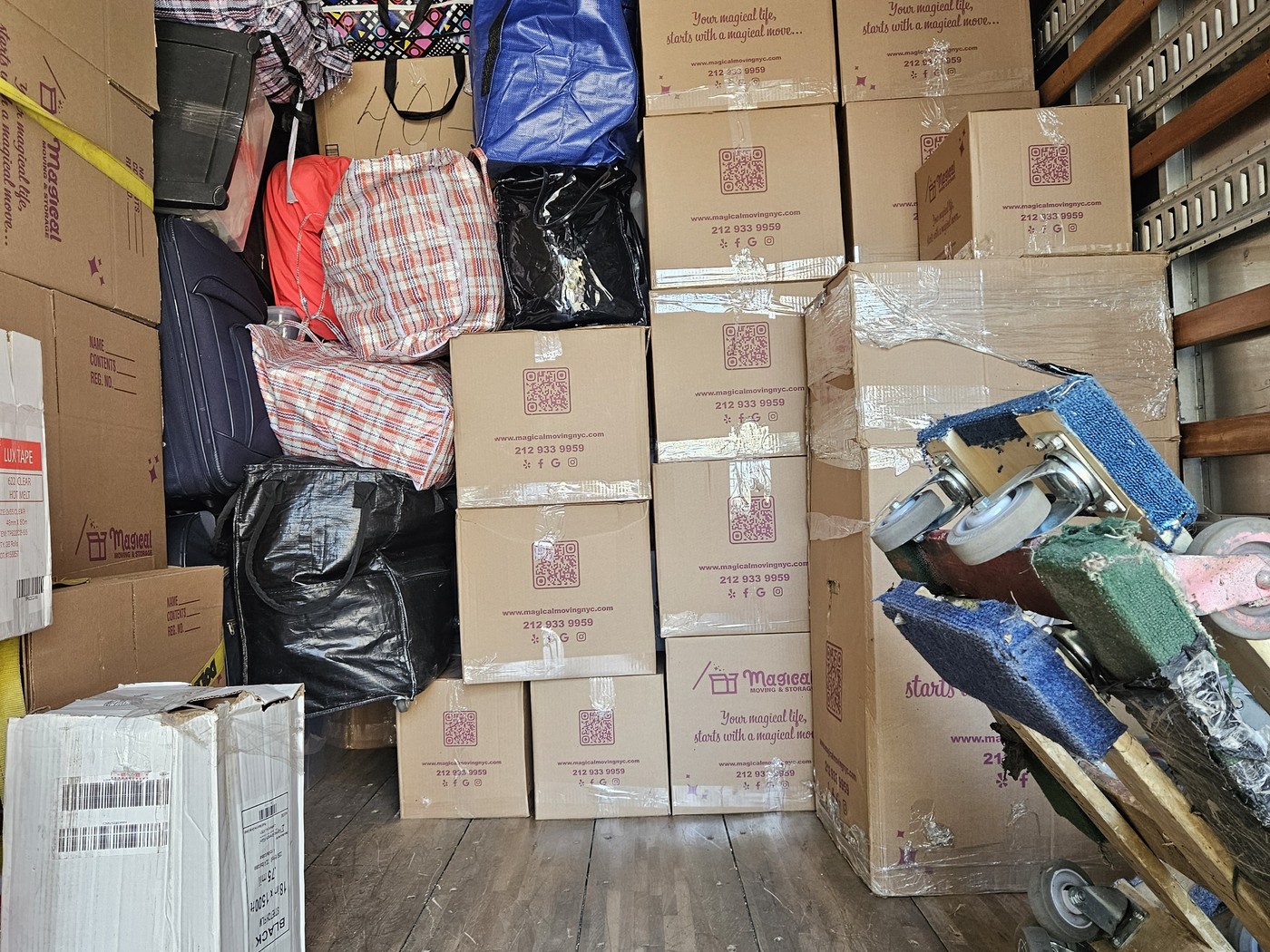
Which apartment gets loaded first depends on the route. The crew plans the order so the day runs in one direction, with no doubling back across town. If there is a storage stop, the storage pieces need to be loaded where they can come off first without unloading everything else. That is a planning question, not a muscle question, and it is why we ask for both addresses and both inventories before the day rather than on it.
The practical part for you: have both apartments ready at the same level. If the first pickup is packed and the second one is still wrapping dishes, the crew and the truck wait, and waiting is billed the same as working.
Three buildings, three sets of rules
This is the part most checklists for moving in together in NYC miss. You are not dealing with one building. You are dealing with three: two you are leaving and one you are moving into. Each can have its own:
- Certificate of insurance (COI). Many managed buildings will not let a mover in without one naming the building. We send them, but we need each building’s requirements.
- Elevator reservation. A service elevator booked at one building and not the other can cost an hour. Here is how to reserve a moving elevator in NYC.
- Move hours. Plenty of buildings only allow moves on weekdays, inside set hours. On a two-pickup day, the last building’s cutoff is the one that decides when you start.
- Stairs. A fourth-floor walk-up at one end is a different job from an elevator building at the other. If either place is a walk-up, tell us the floor. Our map of walk-up apartments in NYC shows how common that is by neighborhood.
Send us all three buildings’ rules at once and we build the day around the strictest one.
Picking the date when two leases end differently
Two leases almost never end on the same day, and that is the first scheduling problem of moving in together in NYC. Most couples pick one of two plans:
- One date, one move. Choose a day when both of you can still get into your old apartments and the new one is yours. Both pickups and the delivery happen together. This is the cheapest and fastest plan.
- Two stages. One person moves in first and the other follows weeks later. That is two moves, priced as two moves. It only makes sense when the dates are far apart.
Fall is a good season for the first plan. Once the September rush is over, the weekdays between mid October and late November are some of the clearest of the year, and a weekday gives you the best shot at three service elevators on the same day. Here are the moving dates in NYC to avoid this fall, and the clear stretches between them.
What to do with the second couch
Every couple moving in together in NYC ends up with extras. For the pieces that are not coming with you, there are three options, and we can handle all of them on the same truck:
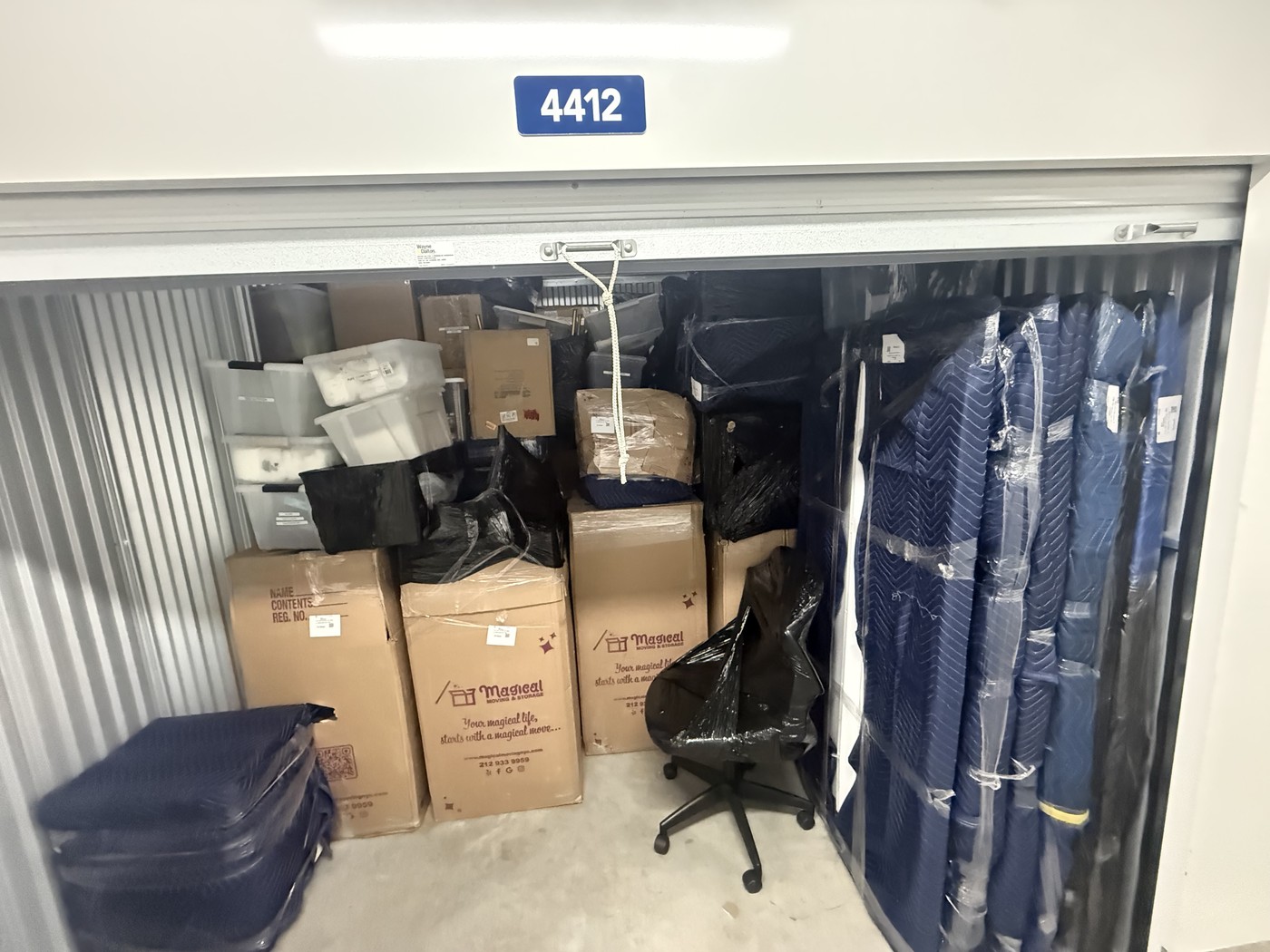
- Storage. The items go to our warehouse on the same run, and come back whenever you have the room. See how our storage options work.
- Haul-away. We can take pieces off your hands so they are gone before the new place fills up. Ask for it at the quote so the crew plans the space on the truck.
- You handle it. Sell it, give it to a friend, or put it out for the city. If it goes to the curb, follow the Department of Sanitation rules for furniture and mattresses (mattresses have to be sealed in a plastic bag).
Decide this before the quote, not on the sidewalk. A couch that was supposed to go to storage and ends up on the curb is a waste of both.
How to get a quote for moving in together in NYC
Send us both listing links, or photos of both apartments, plus the new address. With links, a quote takes seconds instead of a phone call full of guesses, and we can see the stairs, the furniture and the building type at a glance. Tell us which pile each big piece is in, and we will price the pickups, the extra stop and any storage or haul-away as one flat number, in writing, before we load.
944 five-star Google reviews, and a good number of them are from people moving in together in NYC who ended the day with one apartment, one couch and no pile in the hallway. Get a free quote.
Magical Moving & Storage. USDOT 4144902, MC 1589978, NYSDOT 42311. (212) 933-9959.